
Nanny Interview Questions to Avoid: What Families Shouldn't Ask (and What to Ask Instead)
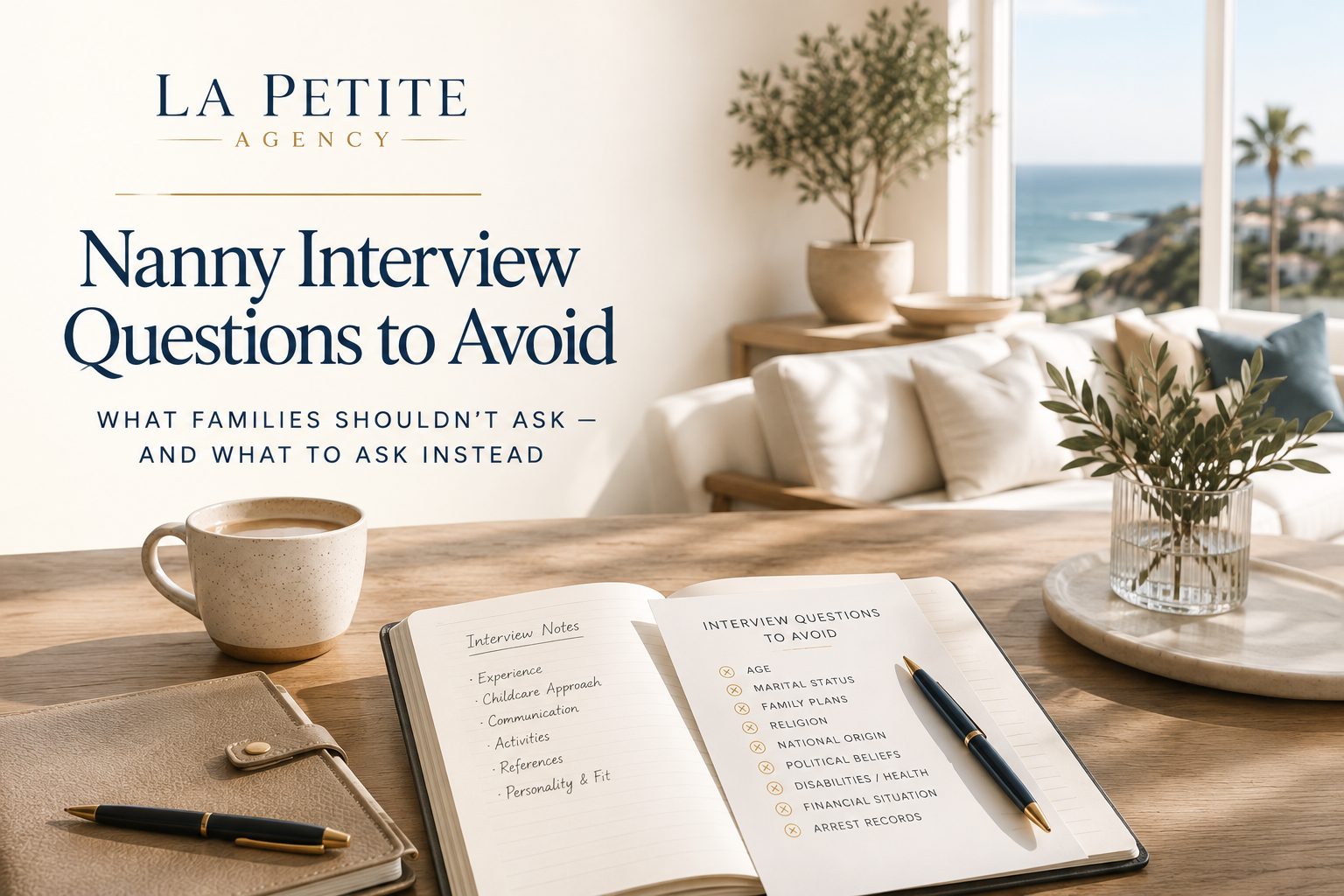
Interviewing a nanny is one of the most important parts of the hiring process. Asking thoughtful questions helps you evaluate a candidate's experience, communication style, childcare philosophy, and overall fit for your family.
If you're looking for ideas on what to ask, be sure to read our guide to Nanny Interview Questions Every Family Should Ask, where we cover the questions that help families make confident hiring decisions.
Just as important, however, is knowing which questions to avoid.
Because nannies are household employees, families should conduct interviews professionally and avoid questions that could be viewed as discriminatory or unrelated to the candidate's ability to perform the job.
Fortunately, there is almost always an appropriate way to gather the information you need.
Why Certain Questions Should Be Avoided
During an interview, your goal is to determine whether a candidate can successfully perform the responsibilities of the position.
Questions about a candidate's personal life, protected characteristics, or future family plans generally don't help answer that question—and in some cases, they may create unnecessary legal risk.
Instead, focus on the requirements of the position itself.
Avoid Asking About Age
It may seem harmless to ask:
"How old are you?"
"What year did you graduate?"
These questions can create concerns about age discrimination.
Ask this instead:
"Are you at least 18 years old?" (if required for the position)
"Can you legally work in the United States?"
"Tell me about your childcare experience."
Experience is far more relevant than age.
Avoid Asking About Marital Status or Family Plans
Questions such as:
"Are you married?"
"Do you have children?"
"Are you planning to have children?"
"Are you pregnant?"
should generally be avoided.
While families may be wondering whether a nanny is likely to stay long-term, these questions relate to a candidate's personal life rather than their qualifications.
Ask this instead:
If you're hoping for a long-term nanny, simply ask:
"What type of position are you looking for?"
"What does your ideal long-term role look like?"
"How long do you typically stay with a family?"
Those questions provide the information you're actually seeking without discussing personal circumstances.
Avoid Asking About Religion
You may be curious whether a nanny shares your family's religious beliefs.
However, asking directly about religion is generally not recommended.
Ask this instead:
Describe your family's traditions and ask:
"Our family celebrates Christmas and attends church on Sundays. Would you be comfortable supporting those family traditions?"
"We're looking for someone who is comfortable participating in our family's cultural traditions. Is that something you'd be comfortable with?"
This focuses on the job rather than the candidate's beliefs.
Avoid Asking About National Origin or Ethnicity
Questions like:
"Where are you from?"
"What country were you born in?"
"What's your first language?"
can be problematic.
Ask this instead:
If language skills are important for the position:
"This position requires speaking both English and Spanish. Are you fluent in both languages?"
"Do you speak any additional languages that you enjoy using with children?"
Now you're discussing a job qualification rather than the candidate's background.
Avoid Asking About Disabilities or Medical Conditions
Families sometimes wonder whether a nanny has any medical conditions that could affect the position.
Rather than asking about health history, keep the conversation focused on the job.
Avoid questions like:
"Do you have any medical conditions?"
"Have you ever been injured?"
"Do you have a disability?"
Ask this instead:
Describe the physical requirements of the role.
For example:
"This position involves lifting an infant weighing approximately 25 pounds, frequent walks, and spending time outdoors. Are you able to perform these responsibilities with or without reasonable accommodation?"
This keeps the discussion centered on the essential duties of the job.
Avoid Asking About Political Beliefs
Even if politics are discussed frequently in your household, interviews are not the place to ask candidates about their political views.
Instead, focus on communication, professionalism, and respect.
Avoid Asking About Financial Circumstances
Questions such as:
"Does your spouse work?"
"Do you need this income?"
"How much does your family make?"
have no bearing on whether someone will be an excellent nanny.
If your concern is reliability or long-term employment, simply discuss:
the schedule
compensation
guaranteed hours
long-term expectations
Avoid Asking About Arrest Records
California has "Ban the Box" laws that restrict when employers may ask about criminal history. In addition, arrests that did not lead to convictions generally should not be considered in hiring decisions.
If background screening is part of your hiring process, it's best handled after a conditional offer of employment and in compliance with applicable laws.
At La Petite Agency, comprehensive background screening is part of our candidate vetting process.
What If There's Something You Really Want to Know?
Sometimes families have completely reasonable concerns but aren't sure how to ask about them.
Instead of asking personal questions, describe the position and allow candidates to tell you whether it works for them.
For example:
Instead of asking:
❌ "Do you have children?"
Try:
✅ "This position requires arriving promptly at 7:30 each morning. Are you confident you'll be able to maintain that schedule consistently?"
Instead of asking:
❌ "Are you planning to get pregnant?"
Try:
✅ "We're hoping to find someone who is interested in a long-term position. What are you looking for in your next role?"
Instead of asking:
❌ "Are you religious?"
Try:
✅ "Would you be comfortable participating in our family's holiday traditions?"
Instead of asking:
❌ "Do you have any health problems?"
Try:
✅ "This position involves lifting, driving, playground visits, and other active childcare responsibilities. Are you able to perform those duties?"
Notice the pattern: focus on the responsibilities of the position—not the person's private life.
Professional Interviews Lead to Better Matches
The best nanny interviews feel like conversations, not interrogations.
When families focus on experience, communication, childcare philosophy, and the responsibilities of the position, candidates are more likely to feel comfortable, respected, and able to show what makes them exceptional caregivers.
Keeping the interview professional not only helps you avoid uncomfortable or inappropriate questions—it also creates a better hiring experience for everyone involved.
How La Petite Agency Can Help
Knowing what not to ask is just as important as knowing what to ask. At La Petite Agency, we help families navigate every step of the hiring process—from sourcing exceptional candidates to preparing for interviews and making a confident hiring decision. If you're ready to find the right nanny for your family, we'd be honored to help.
Need more info?
Visit the the California Civil Rights Department website to dive deeper.
Disclaimer: This article is intended as general educational information and should not be considered legal advice. Employment laws can change, and families should consult an employment attorney or HR professional if they have questions about their specific hiring situation.
